A Quick Apology (And Why This Post Is Different)
I would like to start with an introduction and an apology. The apology is for not posting an article that follows my conventional ‘thoughtful what-if exploratory’ style, but instead a documentation of a recent event I organised. Although it in itself might not be highly interesting from an external point of view, the event points to a deeper importance of why What If questions matter. Also, I promise to seed it with exciting science bits to make it enjoyable for everyone.
So without further ado, here is the introduction:
For a long time, I have thought about how most kids today spend most of their time looking at screens, dulling their inherent curiosity and reducing their cognitive function. I realised that the solution to this is actually very simple: asking and answering ‘What If’ questions. (More about this in the next section.) So, as the Broadening Horizons initiative was also running, I decided to do a city-wide science quest, with, most importantly, what-if style questions on 12 posters throughout the city.
The Event Setup: Market Hill Stall & City-Wide Stations
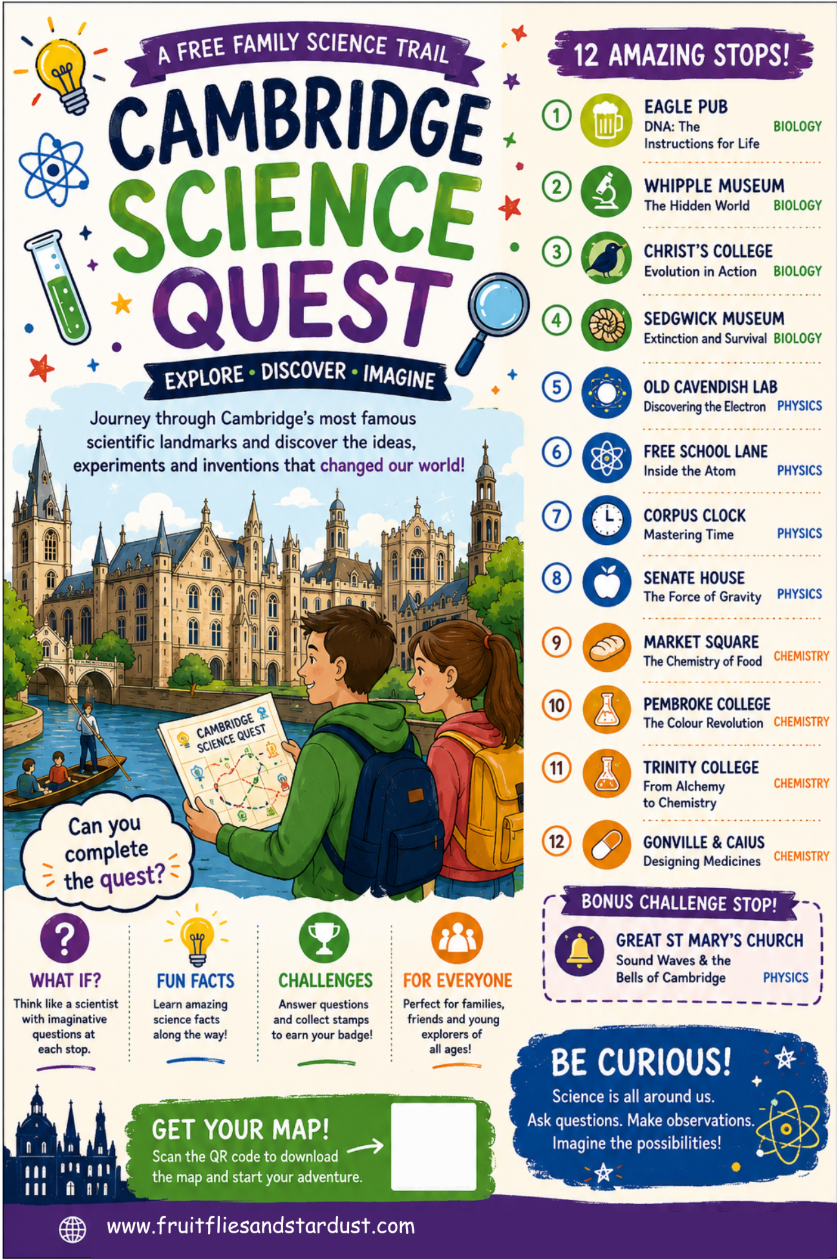
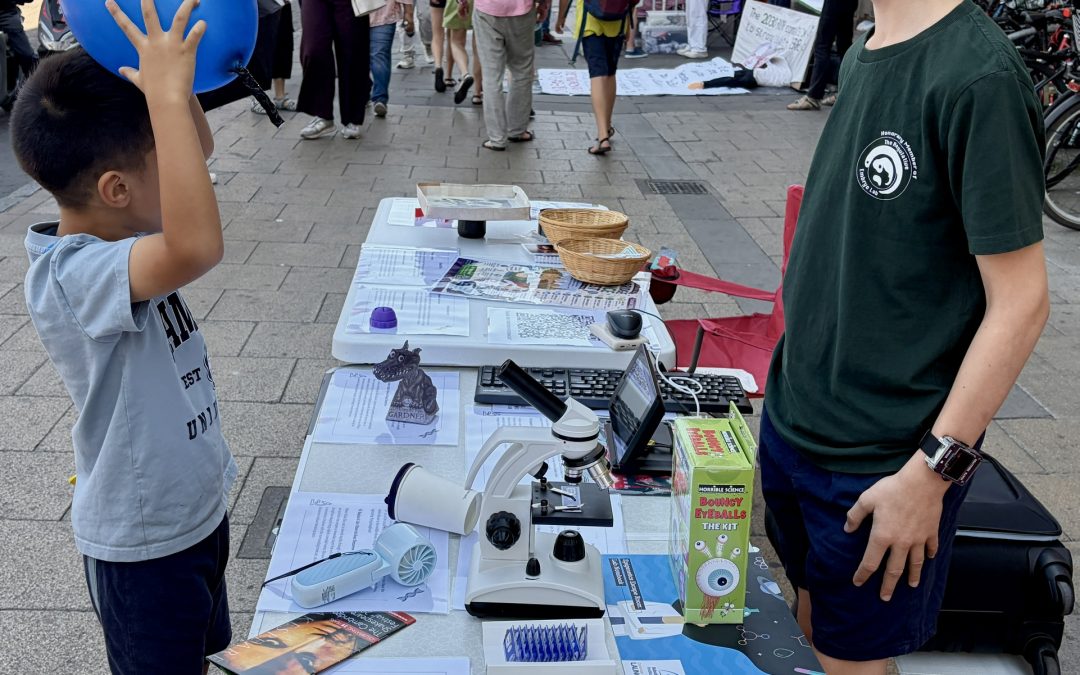
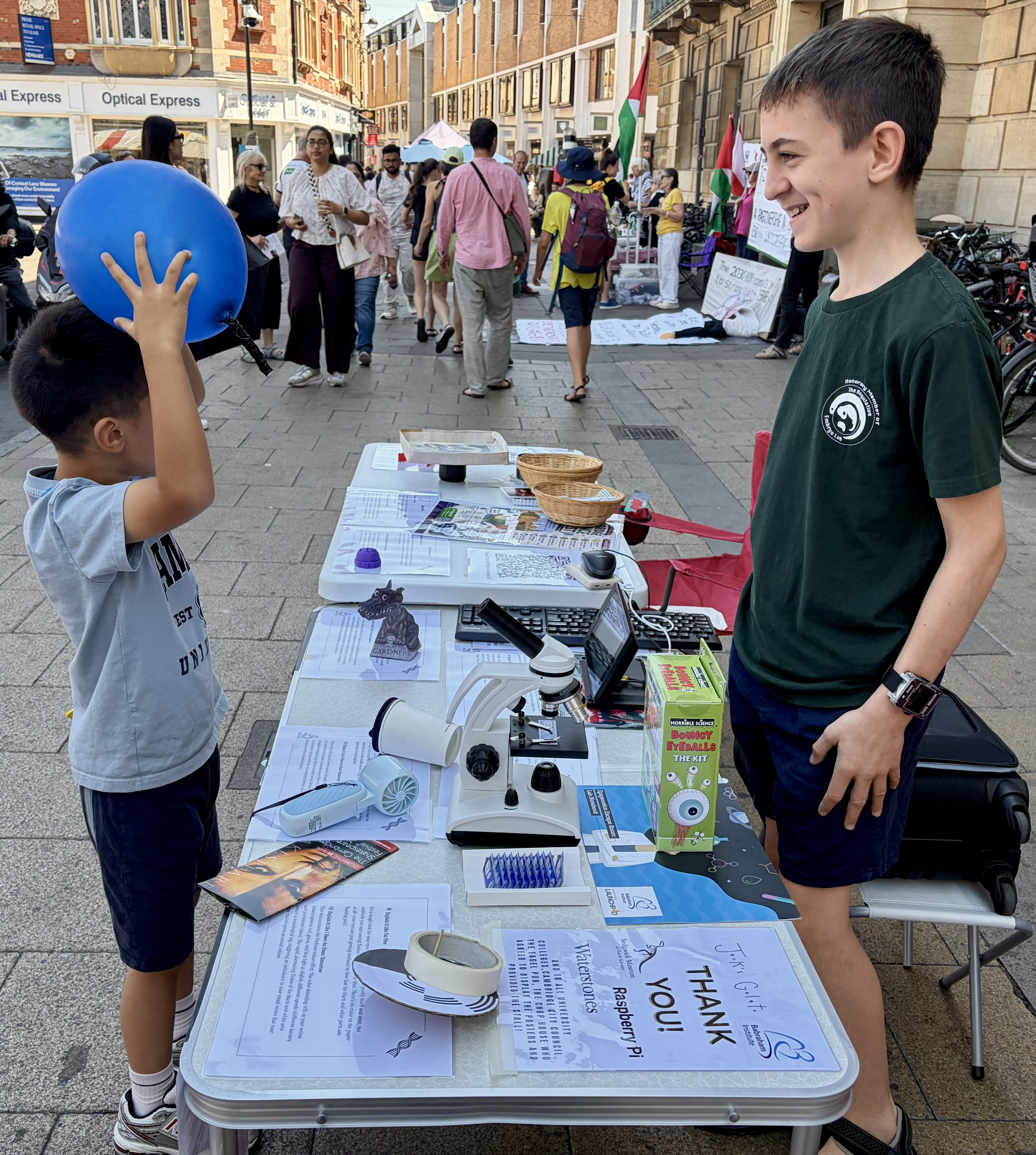
The base point was on Market Hill, where I held a conventional science stall with fun activities like vortex cannons, microscopes and even a DIY Chladni plate (a metal plate with a speaker and some sand on top, which can visualise sound). Then, there were 12 stations throughout the city, with QR codes linking to a regulated Padlet where participants could post their answers. For completion, there was a prize pool where participants could draw a prize.
The base point was on Market Hill, where I held a conventional science stall with fun activities like vortex cannons, microscopes and even a DIY Chladni plate (a metal plate with a speaker and some sand on top, which can visualise sound). Then, there were 12 stations throughout the city, with QR codes linking to a regulated Padlet where participants could post their answers. For completion, there was a prize pool where participants could draw a prize.
As I promised, I have of course decided to include a science section for your enjoyment! Scientific papers such as ‘States of Curiosity Modulate Hippocampus-Dependent Learning via the Dopaminergic Circuit’ further show the importance of exhibiting curiosity. The above paper shows how a highly engaging, curious question can engage the brain’s dopaminergic reward system. This primes the hippocampus (which plays an important role in forming memories), causing the brain to become more receptive to new information, allowing it to understand and process information more effectively.
The Screen-Time Dilemma: Why 'What If?' Is the Solution
However, recently, since the invention of mobile phones and the internet, and now artificial intelligence, the ‘curiosity time’ (the time between asking a question and receiving an answer) has drastically decreased. This made me wonder whether reducing this ‘curiosity time’ could also reduce some of the benefits that come from being curious in the first place. Asking ‘What If’ style questions also engages areas of the brain involved in curiosity, memory, attention and thinking. These together can exercise the brain and help develop neural connections.
Of course, as with every goal or project, there were numerous challenges along the way, but I solved most of them, and the ones I wasn’t able to, I found workarounds. One of the major ones was finding enough people who were willing to take part in the quest. I explored various options such as trying to arrange for an advertisement at the information centre. However, I realised that not many people of the age and interest recommended for this quest actually go into the centre, so I decided to send emails to primary schools in the area since those would likely have children of the age and interest I wanted. This turned out well, and I ended up with dozens of budding, primary-school-age children at the stall!
Also, since many of the stations were on university property, I needed to contact various colleges to be able to place the posters. However, one of the colleges had an event going on at the time, so I had to arrange for a stand to be used. Initially, Christ’s College even denied my request, but I wrote a letter to Lord McDonald, and he granted me permission to place the poster.
Sparking a Passion for Science
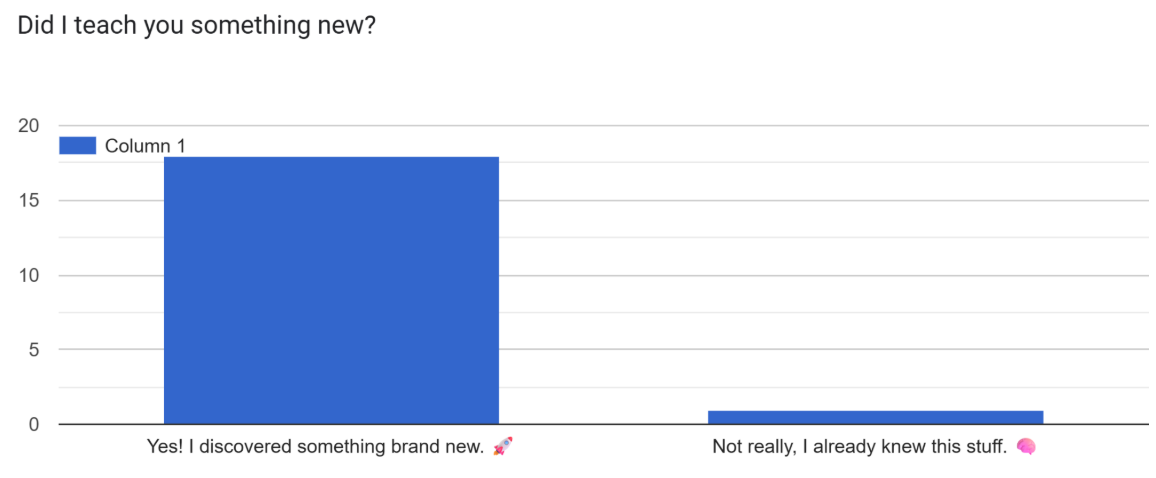
In conclusion, this was a fun project, and definitely a learning experience! I did learn a lot about communicating difficult concepts clearly to people through practice, and about organizing public events. People did come and complete the quest and look at the stall, and seeing their reactions when they learned something new was unforgettable. I think that this project was a huge success, not only providing a learning experience for me, but for all the people who took part, and I do hope that I managed to spark a love for science in at least a few people.