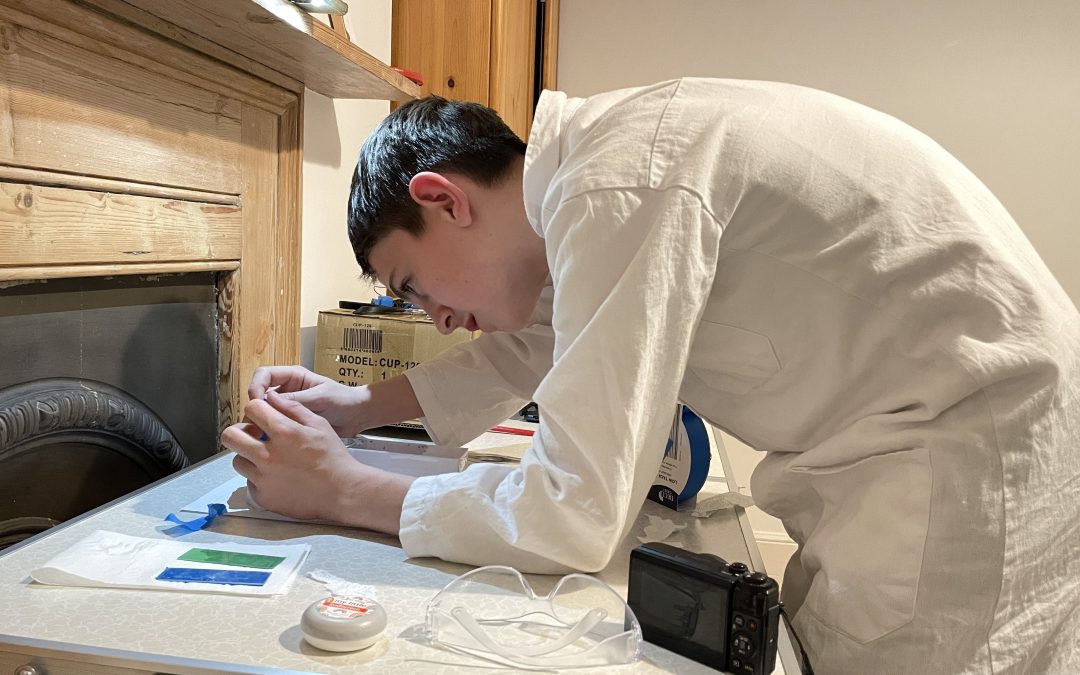
It is extremely likely you have encountered flies before – tiny black dots zooming around, seemingly aimlessly. But are they really as unintelligent as they seem? Or are they capable of learning, or even being trained by a human? A few months ago, I had this question floating around my head. I just couldn’t stop thinking about it. Coincidentally, that was when I found out about CREST awards – science awards run by the British Science Association. There are three tiers: Bronze, Silver and Gold. I did some research, and found out that my experimental idea could be tested, and in fact, would work perfectly as a Silver award.
I set to work, finding out how to train fruit flies (more about why I chose them later), but the results I got either required a lab, and expensive chemicals or were straight out thought experiments. I decided to take matters into my own hands, and conduct the experiment myself. This article is more than just the results – it is the entire journey, from thought to data.
It is extremely likely you have encountered flies before – tiny black dots zooming around, seemingly aimlessly. But are they really as unintelligent as they seem? Or are they capable of learning, or even being trained by a human? A few months ago, I had this question floating around my head. I just couldn’t stop thinking about it. Coincidentally, that was when I found out about CREST awards – science awards run by the British Science Association. There are three tiers: Bronze, Silver and Gold. I did some research, and found out that my experimental idea could be tested, and in fact, would work perfectly as a Silver award.
I set to work, finding out how to train fruit flies (more about why I chose them later), but the results I got either required a lab, and expensive chemicals or were straight out thought experiments. I decided to take matters into my own hands, and conduct the experiment myself. This article is more than just the results – it is the entire journey, from thought to result.
Why Fruit Flies?
Why Fruit Flies?
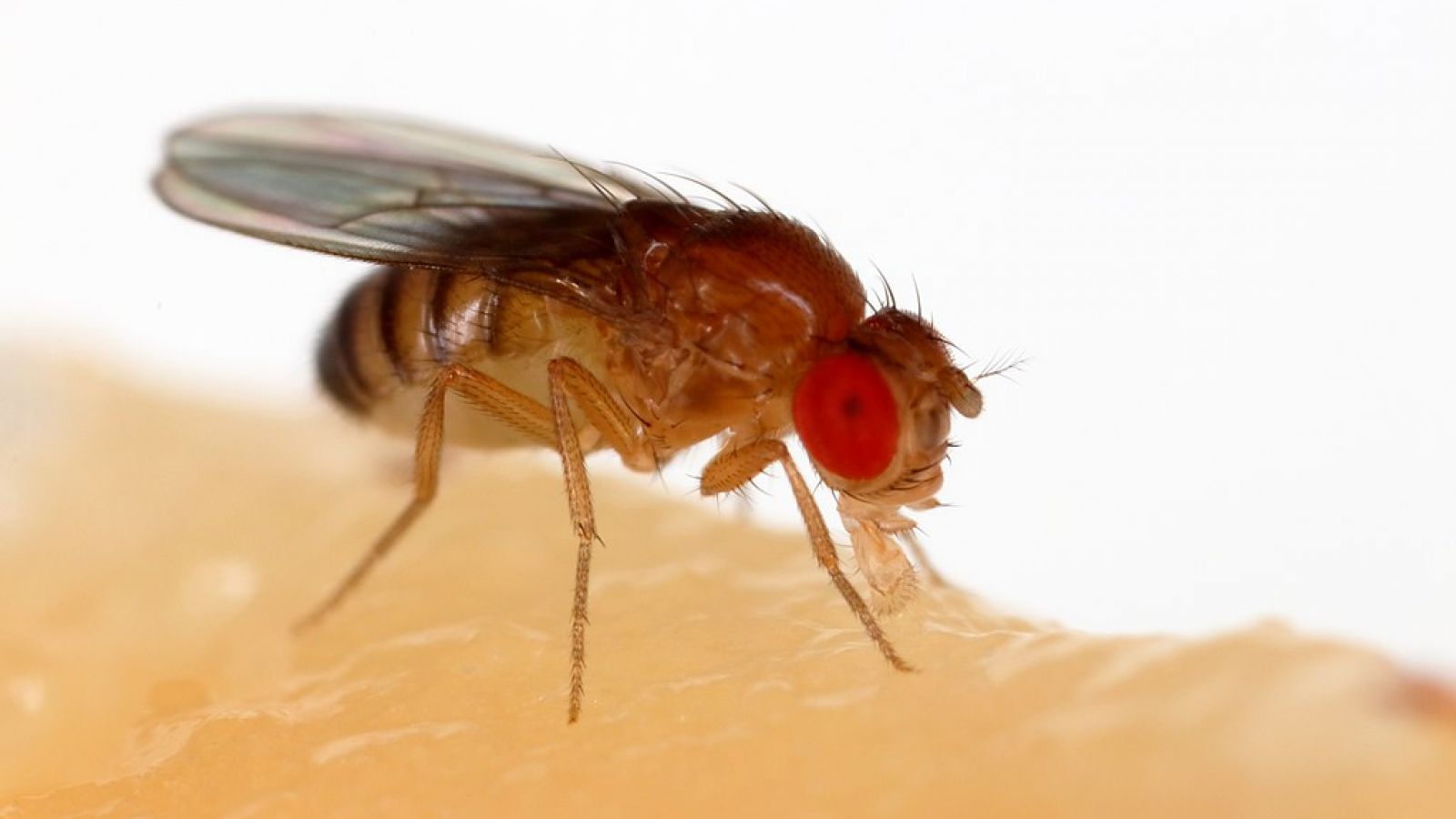
I chose fruit flies (Drosophila Melanogaster) for a variety of reasons, but two were the most significant. One, was that fruit flies are extremely easy to source, from websites such as Darwin Biological and Advanced Husbandry. The second (and most important) reason is that fruit flies have a huge background in biology, and, as a result, have a similarly large amount of resources attributed to them. This includes information on how to handle them, and data from previous experiments. They are used in medical research a lot, as they are easy to source, and have around 60% the same DNA as humans.
I chose fruit flies (Drosophila Melanogaster) for a variety of reasons, but two were the most significant. One, was that fruit flies are extremely easy to source, from websites such as Darwin Biological and Advanced Husbandry. The second (and most important) reason is that fruit flies have a huge background in biology, and, as a result, have a similarly large amount of resources attributed to them. This includes information on how to handle them, and data from previous experiments. They are used in medical research a lot, as they are easy to source, and have around 60% the same DNA as humans.
The Plan
The Plan
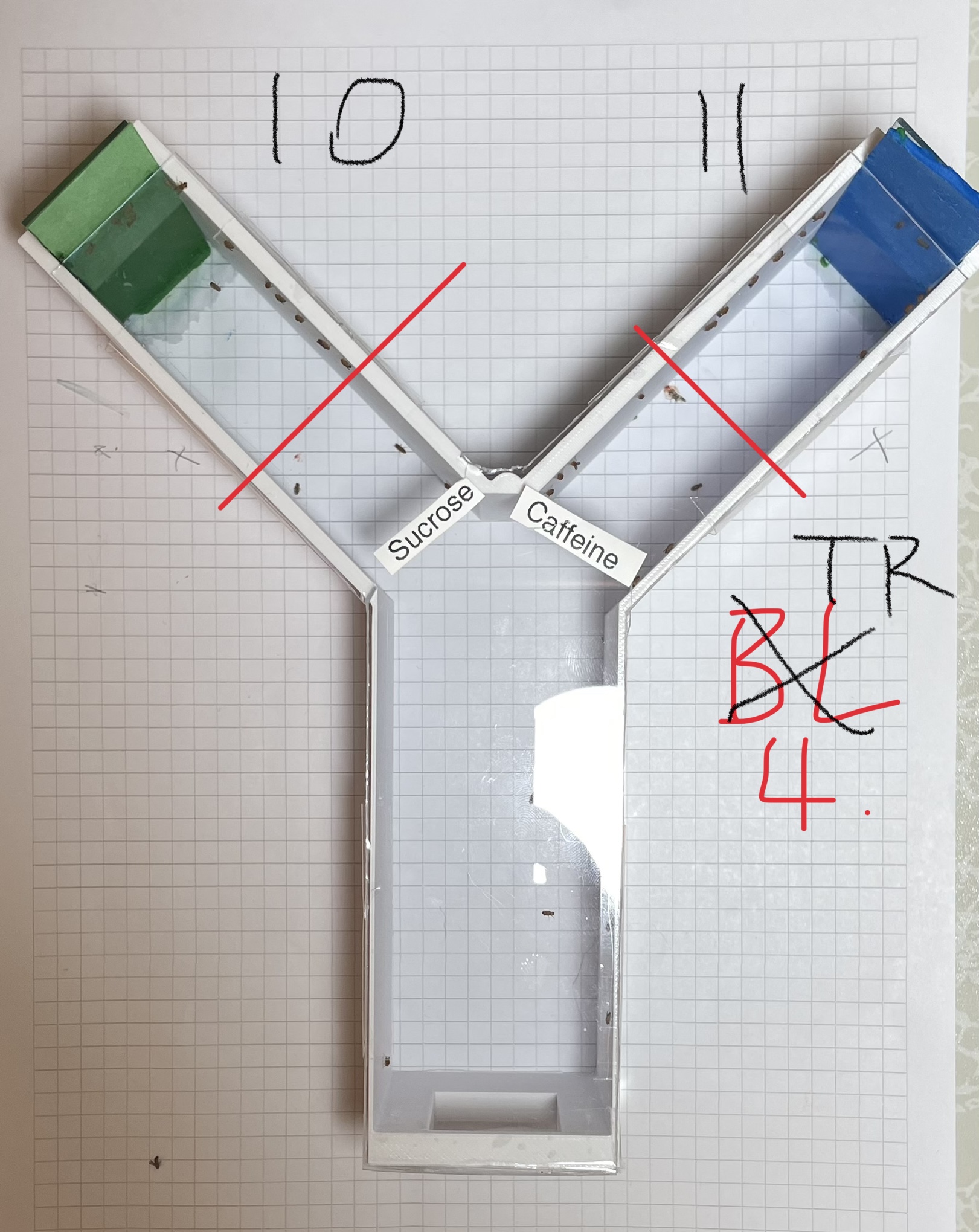
To train the fruit flies, I needed 3 things for the experiment to function: A secure Training container, a stimulus and condition, and a safe way to count the number of fruit flies. I settled on a Y maze for the training container, as it ensured scents didn’t mix and each side stayed separated from each other. As a stimulus, to motivate training, I used paddles soaked in either caffeine (bitter) and sucrose (sweet) which were either green or blue. The top of the Y maze was see through to allow pictures to be taken. The plan would be to swap the paddles around (but keep one color associated to one flavor) with a batch of fruit flies in the Y maze, but with a batch, one color means one specific flavor, and, then, water paddles would be inserted, and I would see which colour was the most preferred. I chose caffeine and sucrose, as they are relatively non volatile (don’t evaporate) and are easy to source.
Prep
Prep
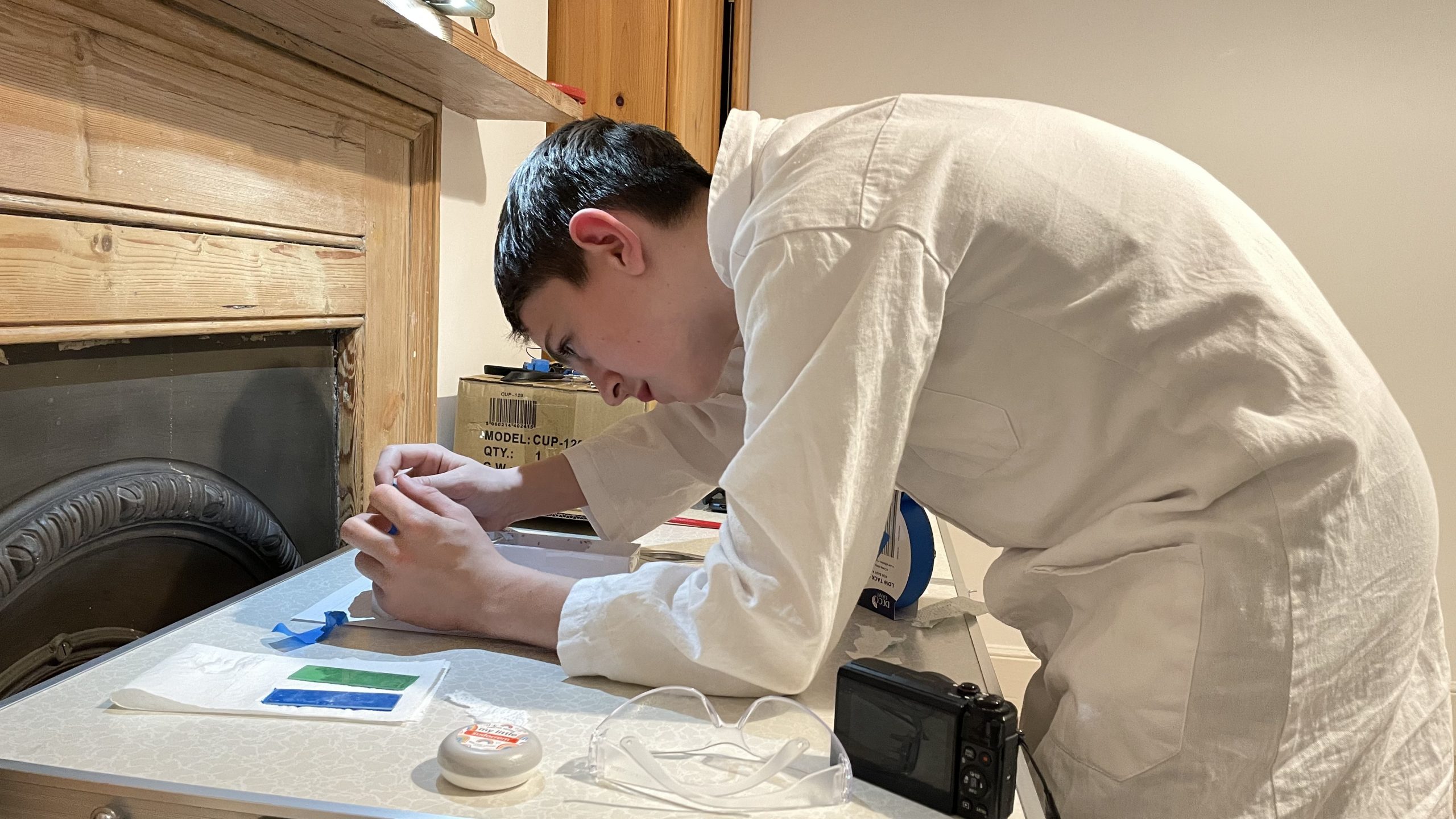
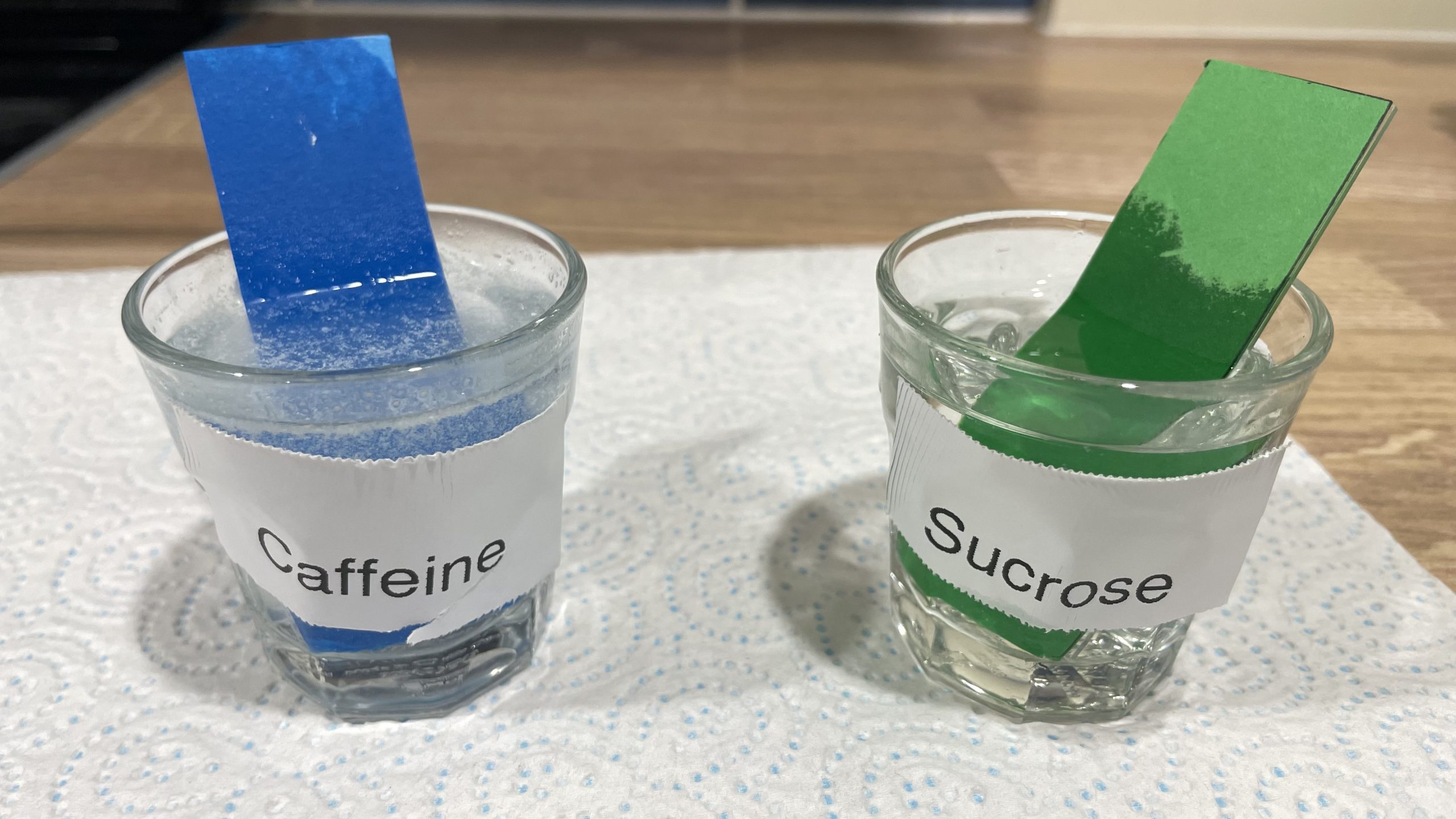
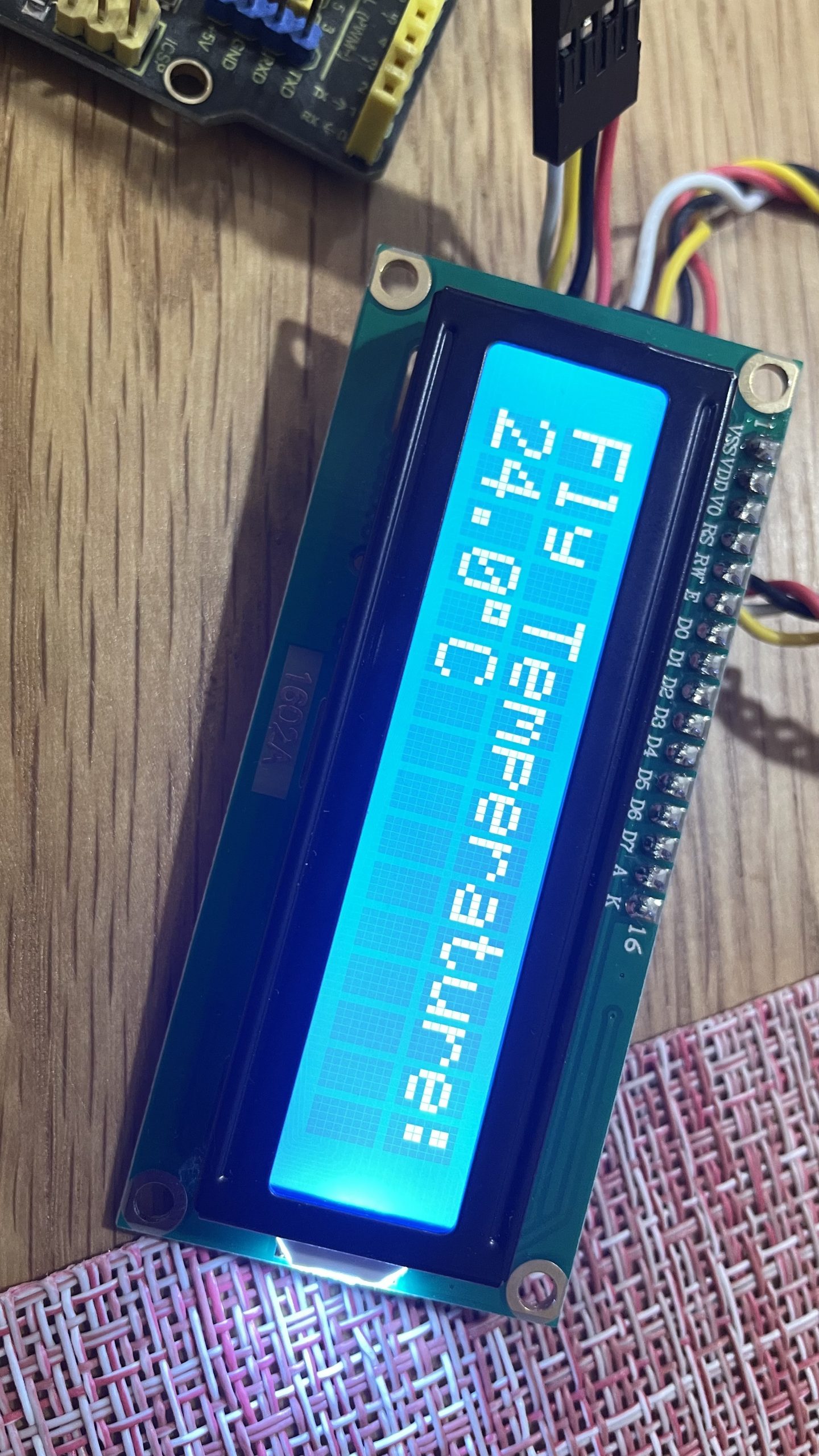
To prepare for the practicals, I needed to obtain quite a few things. Most important was the Y maze (which I 3D printed) and the fruit flies, which needed to be ordered in advance. I designed the Y maze on Tinkercad, and printed it on my CrealityK1SE 3D printer. I used a picture frame cover cut into a Y shape as top cover, to enable the camera to take pictures from the top. The fruit flies were sourced some time later from Darwin Biological. However, to make the experiments consistent, I had to eliminate any other variable than the color and flavour of the paddles, one of which was temperature and humidity. To keep this consistent, I designed a custom temperature and humidity logger and readout, using a DHT21 Temperature and humidity sensor, Arduino Uno, an RTC and an LCD display. I also made a light timing system to control the lights inside a storage box in a 14h:10h light cycle.
I sourced the caffeine from high concentration caffeine pills and the sucrose from sucrose syrup.
Method
Method
To train the fruit flies successfully, I devised a method to help me. The first step would, of course, be to do some prior research and prepare the equipment. Once that was done, I could actually begin the experiment. The experiment consisted of multiple steps, the first being to prepare the paddles. A strip of green paper and blue paper were glued to two microscope slides, and soaked in either caffeine solution or sucrose solution. The next step is to make another pair, soak them in water and insert them into the Y maze. The fruit flies were released into the Y maze (an arduous operation) and the numbers on each branch were recorded and logged. This served as a baseline. The next step was the training phase. The paddles were inserted with one color ‘meaning’ one flavor in each test. After that they would be swapped around every 10 minutes, to remove positional bias. After 5 swaps, neutral, water soaked paddles were inserted. The fruit flies on each wing were counted and, if the number of fruit flies on the color that was previously associated with sugar is higher than that of the caffeine, the fruit flies have learned the association.
Results
Results
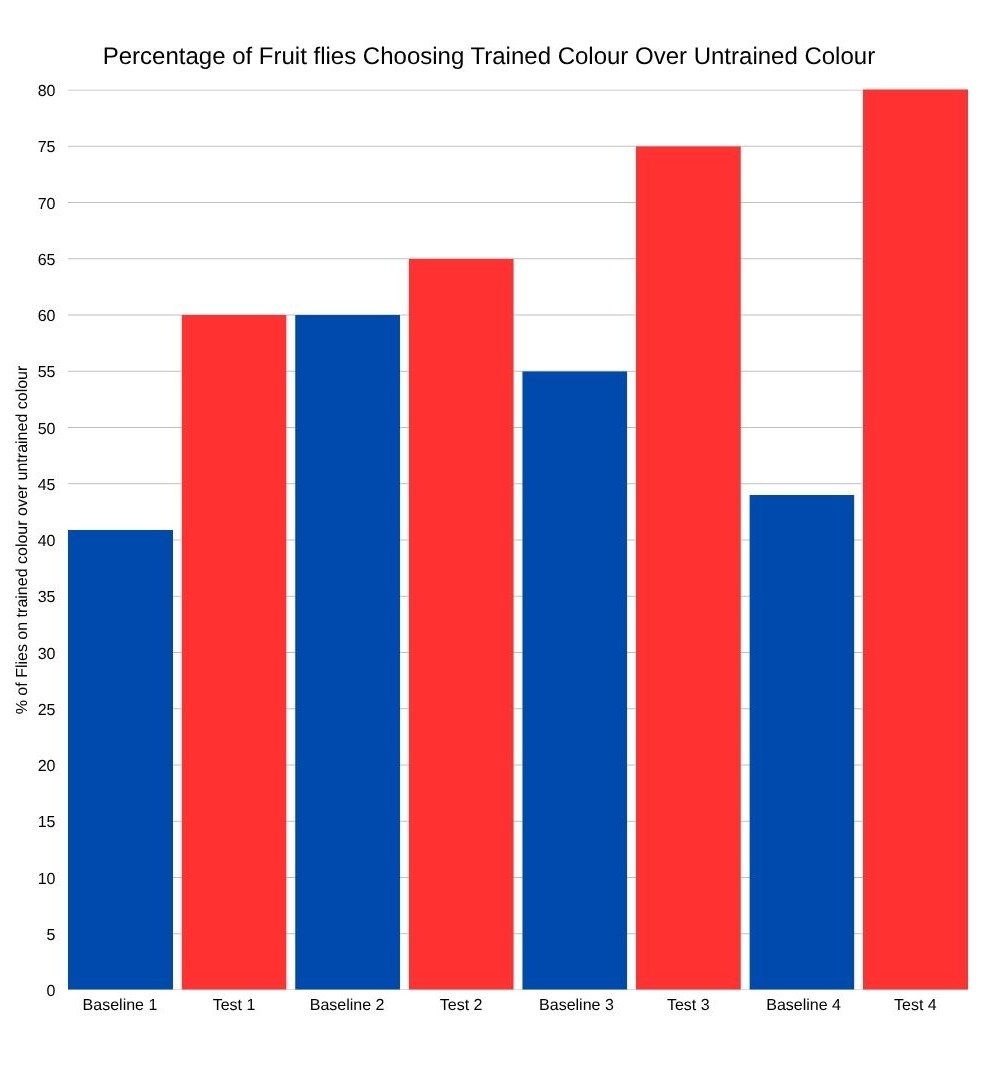
The fruit flies, surprisingly, did in fact learn the association, and the data was very promising. There was a visible change in preference before and after conditioning, and the data respected this (there was an average of a 20.5% increase). As you can see, the percentage of fruit flies choosing the expected color was higher (by quite a large amount) after the training than before, which shows they actually managed to learn! This was quite a moment for me, as I realised that the ‘little black dots with wings were actually (slightly) intelligent beings.
Challenges
Challenges
While doing the project, I encountered various challenges, like putting the fruit flies into the container and debugging the environment logger. However, after doing some research and looking deeper into the problem, I realised that solving these problems required minimal resources and time. The fruit flies only needed to be put into the freezer for a short time, to put them into a state of torpor (lack of mental and physical activity, like anaesthesia) and then transferred, one by one into the maze, while they were still ‘asleep’. The code was even simpler, and turned out to be a hardware problem not a software one, and all that was needed to fix it was swapping around two wires. In the project, however, I did come across much harder problems, which required perseverance and determination to solve, such as obtaining the fruit flies. I needed to do extensive research on the best supplier for fruit flies, and since most suppliers for fruit flies offered the flightless variety, I needed to find lab grade suppliers like darwin biological to suit my needs.
Real World Uses
Real World Uses
This experiment may seem like only an answer to a niche question, but, in fact, could hold (or partially hold) the answer to curing some of the gravest neurological disorders like Alzheimer’s and Parkinson’s disease, as one of the most prominent symptoms of these disorders is memory loss. Since we share around 60% of our DNA with fruit flies, they can contract many diseases humans can, like the above mentioned Alzheimer’s and Parkinson’s. New drugs to cure or slow down this condition could be tested on a batch of flies that have been induced with one of the memory impairing diseases, and then would be tested before and after the drug is used to see if they can remember the colour more effectively.
Conclusion
Conclusion
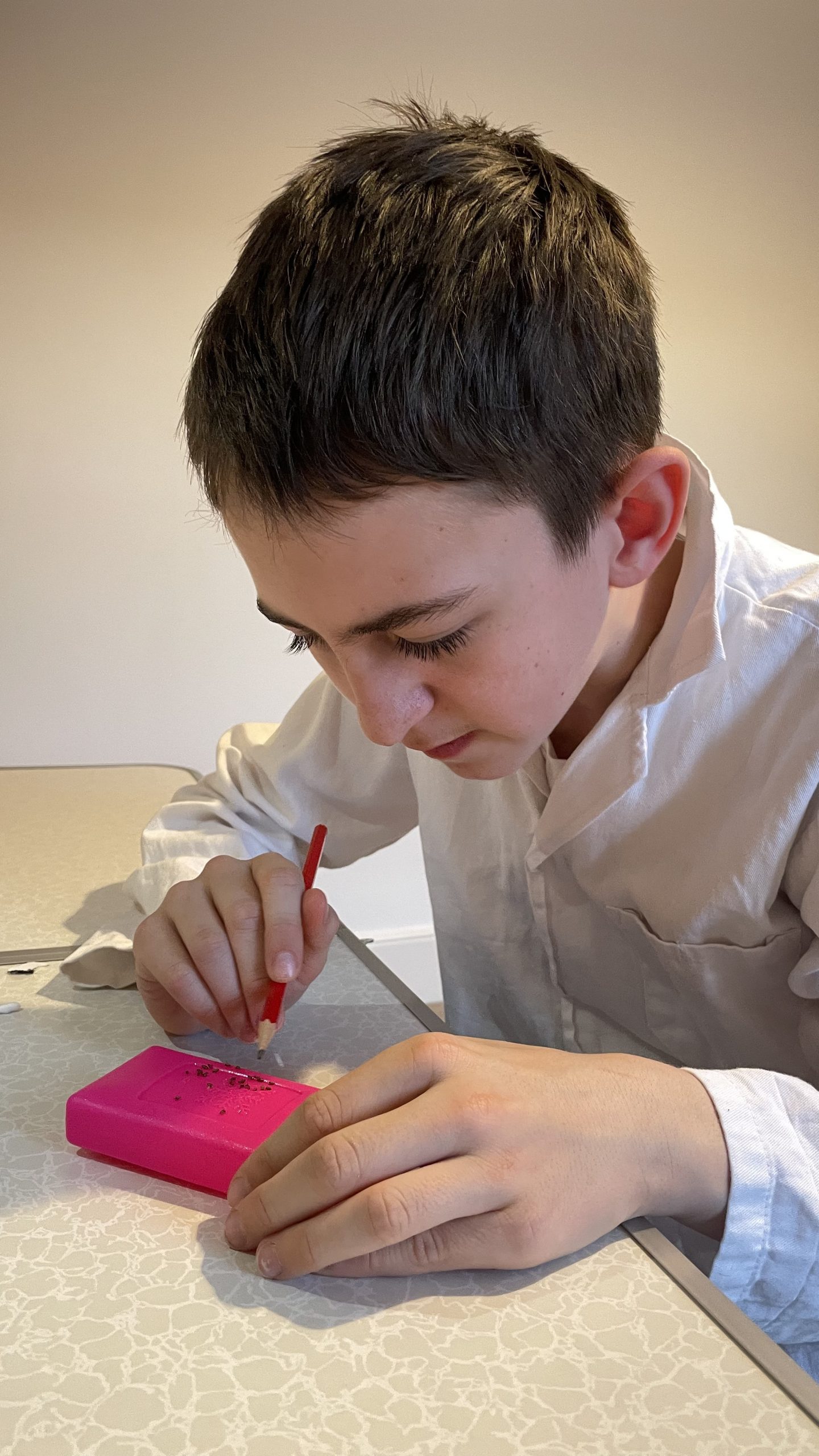
After months of planning, execution and writing the whole thing up, I have finally submitted the experiment to the CREST association, and have received the award. This experiment was definitely a learning curve, not just in fruit flies, but how anyone can perform a complex experiment like this in a home environment. Also, I haven’t mentioned this yet, but this is my first real event based, scientific article, so I am still getting used to this writing format. But, don’t worry, the next article will be a ‘what if’ style one, so stay tuned!
WOW! Fantastic work Richard
Thank you, it was so much fun!
Hello Richard! I’m Shiv. I met you at your science stand. It was great to meet you! Thank you for all the gifts you gave us. I went to the raspberry pi store and looked at a lot of stuff it was very interesting. But I didn’t buy anything because I live in Massachusetts, USA, and we decided to buy once we are home. But I did get the raspberry pi book on my kindle and I’m currently reading it.
Your website is very nice. I really think that this fruit fly experiment you did is really cool and I can not believe you actully trained the files!
We are here in Cambrige until Aug,7, then we spend some time in Italy and Sweden until we go back home in September when school starts.When does your school start?I hope we continue writing to each other.
Bye, Shiv